Campaigns

We love working with teams to build community partnerships.

We can organise Citizen Juries.

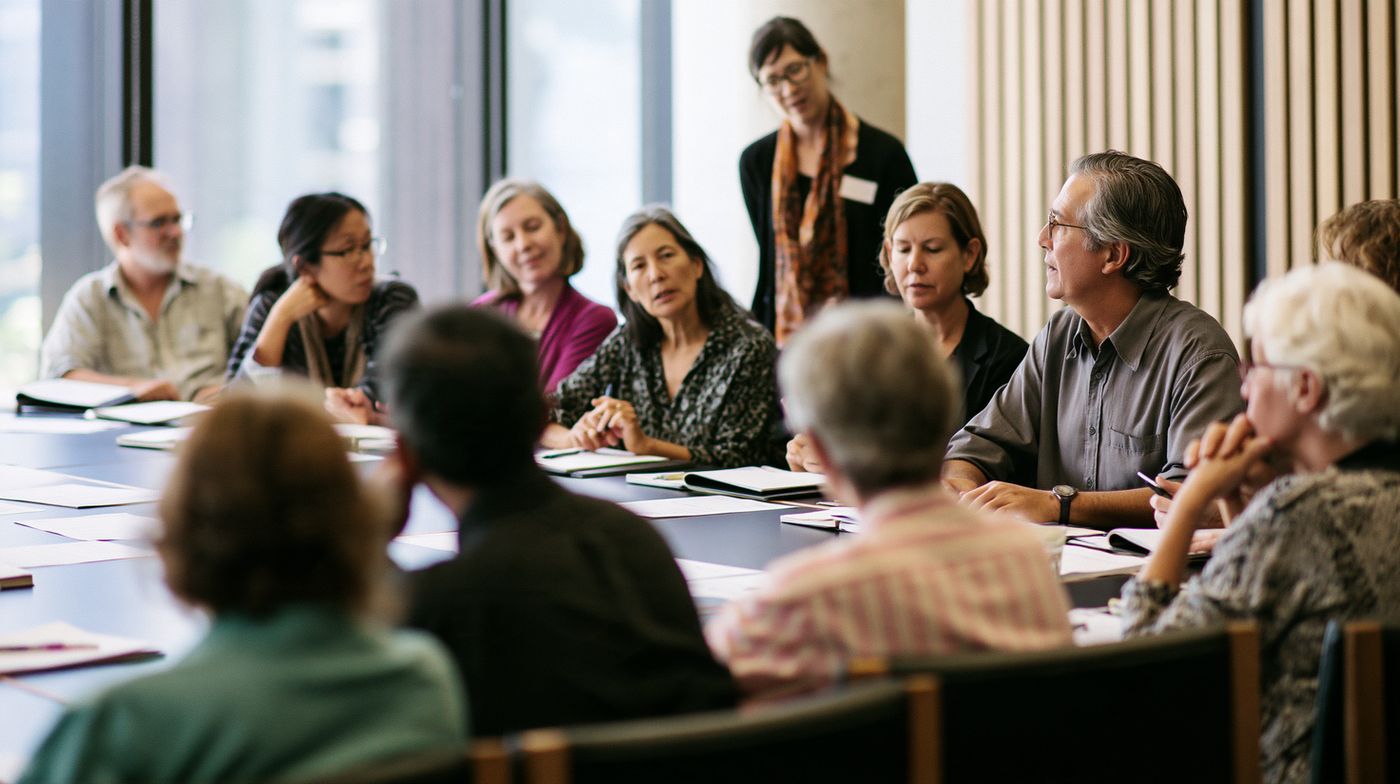
A group of people seated around a table in discussion

Our work

We have a track record going back several decades, involving partnership with consumers and communities to improve healthcare quality, safety and accessibility.

In a search for greater and improved authenticity in these partnerships we have worked with a range of activities to generate real insights into what communities need.

  • We can facilitate small and large groups to learn from them and to communicate complex information about health and social care.
  • We love working with teams to build community partnerships.
  • We can develop optimal communications to facilitate good relationships into partnerships.
  • We can organise and run Citizens' Juries.
Hospital campaign

Auburn Hospital Partnering with Consumers campaign

The hospital serves a community with a high number of residents who speak a language other than English at home.

Hospital management wanted to systematically build partnership with local communities and needed to understand what their experiences were. This gave a baseline for how to think about, design, implement, monitor and evaluate the services the hospital delivered.

The first step was to discover what staff and consumer representatives wanted to achieve and what elements might build a productive campaign.

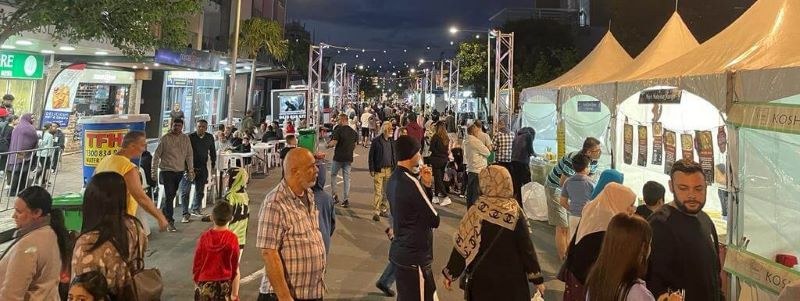
A busy Auburn street at night during Ramadan, with food stalls and crowds
Ramadan in Auburn village ... "During Ramadan the community is a beautiful food festival after Iftar!".
First video

Firstly we sat down with Auburn hospital staff and executive to find out what their hopes were for partnering with consumers. Auburn hospital is full of good people, loyal to the population and hard working. They wanted to improve where they could and build relationship with the people so that their services were what the people wanted. Then we asked the people from the Consumer Council what they thought would be useful and high impact activities that could make up a campaign for a high return on investment. Once we had heard what all the participants had imaginated1 we put together the campaign.

1. "imaginate" v. (to) tap into creative and ambitious ideas with a practical expectation that it is possible if the time, place, people and energy is right

Second video

We co-designed with the consumers and the staff a campaign to wrap around the hospital for a three month period. This is what happened next:

Third video

Importantly, things changed once hospital management learned from the campaign. To find out more watch the third video.

Citizen Juries

Citizen Juries

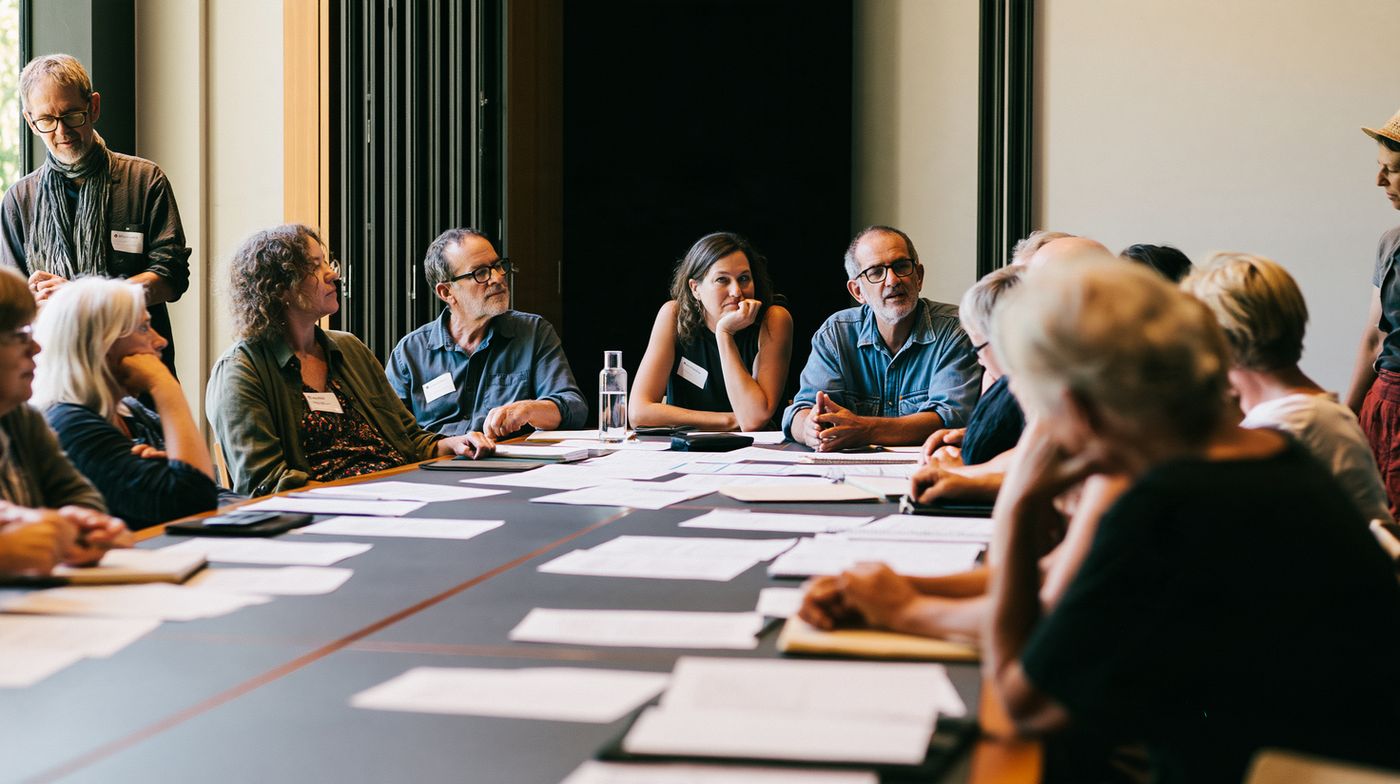
A group of people seated around a long table with papers
1

Primary Health Network led Citizen Juries

In my experience building health partnerships with communities, I believe one of the most authentic ways to hear the voice of a well-informed public is to convene a citizen jury. The Western Sydney Primary Health Network took on the challenge to host and sponsor two citizen juries in Western Sydney in 2023, aiming to really understand the health and social care priorities of Western Sydney people. There was potential to embed the findings into business as usual, and that is unusual and important. The research is clear that this final step is what makes a huge difference. Over time, a permanent citizens' assembly, with rolling membership, has the potential to grow in health literacy and collective power, to be able to respectfully and intelligently lead change for the public good

A seated audience listening to a speaker
2

Thinking about organising Citizen juries?

To understand what your community really thinks about an issue, I am convinced by the evidence that a citizen jury delivers in spades.

We often hear people talking about issues that are sometimes politicized - and they don't have access to good quality information to inform their opinions. This is the particular merit of a citizen jury. The organisers have a responsibility for providing good quality evidence before asking the citizens to come to consensus with a view on the question before them.

To organise a jury, firstly you have a question. You are interested in a topic and you want to know what your community thinks about it. Then you need to consider what the community needs to know about the topic to be well-informed. This might include information about population health, ethics, data, technology, science - depending on your question. You also need local advice to ensure that your jury is going to work for your community. How should you present your evidence? What experts are available to speak to their part of the evidence?

How you recruit your jury is important, there are many considerations here. Do you commission a social research company to recruit for you? There may be a few options available. You need a venue, and considerations of timing and budget are crucial. It's complex but it has an evidence base which will ensure you succeed.

A person taking notes in a notebook during a meeting
3

Citizen Juries - introductory evidence

Citizen or Community Juries are a grass roots method of hearing what the community really thinks when they are informed about an issue. They are life changing for jurors and the organisers behind them. The Citizen Jury is designed to allow decision-makers to hear the people’s voice. It provides an opportunity for citizens to learn about an issue and deliberate together to find a common ground solution1.

Citizens' juries permit citizens to engage with evidence, deliberate and advise on a range of complex and demanding health and policy topics2. They are a complex process that allows thoughtful input from a well-informed microcosm of the public3 on behalf of communities rather than as a consumer or an advocate4.

Use of a trained and experienced facilitator can support citizens to make a well-informed largely consensus decision5. Deliberation is aimed at transforming participants’ perspectives from initially a self-regarding and limited perspective to take account of a broader perspective inclusive of the public interest.

There are presumptions that individuals are motivated by things beyond self-interest and are not separate entities detached from those around them6

  1. The Jefferson Center, Citizens Jury Handbook. 2004.
  2. Street J, Duszynski K, Krawczyk S, Braunack-Mayer A. The use of citizens' juries in health policy decision-making: a systematic review. Social science & medicine. 2014;109:1-9.
  3. Tully MP, Bozentko K, Clement S, et al. Investigating the extent to which patients should control access to patient records for research: a deliberative process using citizens’ juries. Journal of medical Internet research. 2018;20(3):e7763.
  4. Degeling C, Carter SM, Rychetnik L. Which public and why deliberate?–A scoping review of public deliberation in public health and health policy research. Social Science & Medicine. 2015;131:114-121.
  5. Street J, Fabrianesi B, Adams C, et al. Sharing administrative health data with private industry: A report on two citizens' juries. Health Expectations. 2021;24(4):1337-1348.
  6. Simpson, P.L., et al., Identifying research priorities to improve the health of incarcerated populations: The Lancet Public Health, 2021. 6(10): p. e771-e779.
A line of people holding hands on a beach at sunset
4

The 2023 Citizen Juries - the beginning

Early in 2023 the Chief Executive of the Western Sydney Primary Health Network, aka WentWest, accepted an evidence review that pointed to the value in running a citizen jury in Western Sydney. A citizen jury could ask the community to identify the health and social care priorities, enabling targeted investment that would provide great returns for the people. We knew that our Community Advisory Council had provided great input to existing programs in our organisation but that it was difficult to go back to the basics. We wanted the first step - a foundation - so that we could build on it.

We soon realised that we needed to separate out two distinct populations in our community - First Nations and the rest of the population whose ancestors have been here for less than 250 years. A jury is a representative sample of a distinct population, however defined. The two groups have a lot in common but a lot that is not. I am so glad we made that decision.

It took us many months of preparation - listening to internal and external stakeholders and taking on board their advice for how a citizen jury would most effectively deliver in our community. It was a lot of work, but worthwhile. That advice really changed our directions many times. We understood that we needed to be very careful about how we provided the 'evidence' for the juries to deliberate upon. Western Sydney, perhaps moreso than many other communities, is richly populated with people who are more comfortable speaking a language other than English at home. This is important because health and social care facts can be complex and we wanted our juries to be able to come up with well-informed viewpoints.

A country road through green hills
5

The jury hears the evidence

The jury had been recruited to align with the Western Sydney population profile. The handbook containing the evidence had been shared with all the jurors and tonight we are meeting all the members of the jury for the first time. The excitement and anticipation was palpable, not just for the jurors, but for all of us organisers as well.

My team was busy, we had a weekend in front of us, all the work, the thinking, the planning, this is it!

Last night, Friday night, we started to socialise how the jury will work over the weekend, and the importance of deliberating "for the public good". The ice was broken and people were excited.

What a wonderfully diverse group!

Today, Saturday we kick off with our carefully created program anchored by the experts we have been working with over the last few months to produce the program. Experts are presenting in panels representing life stages and using two hypothetical families to show (not tell) how the health system currently functions and alternative realities for how we (the people) could invest in the system.

After a panel presentation, equal time is given to jurors for question and discussions. In the breaks the jurors are excited about the new information they are learning about and want to share with their networks.

The day goes well. Now ... let's get some rest for the deliberations tomorrow!

People sitting together in a circle on grass by a city waterfront
6

The jury deliberates

It's Sunday. Today I will be working hard to make sure the jury has considered and digested the evidence and (hopefully!) comes to consensus about how we should invest in the health system in our region.

Friendships between the jurors are forming. Conversations are alive, jurors are excited with the potential for system changes that better serve everyone. So am I!

We go through the evidence discussing what resonates. The discussion is really intelligent. It's always beautiful to witness how a well-informed group representing a community - thinking of the common good - comes up with spot on recommendations.

Many different viewpoints are considered and it is clear this group is on fire.

Finally, we have some recurring linked themes and we are on our feet, jurors voting and prioritising recommendations. The Chief Executive has arrived, spokespeople are identified and the jury starts to share their findings.

Fresh vegetables in baskets
7

The community recommends

In 2023, two Western Sydney communities delivered their recommendations. Two Community Panels, aka, Citizens' Juries, had a lot in common about how they prioritise what is important in health and social care.

A hand wearing a smart watch
Our community wants more investment in prevention - data is increasingly important in a proactive General practice. And the team should support the GP and include allied health, navigators, social prescribers
Children with their arms around each other
The community wants community hubs which function as a one-stop shop
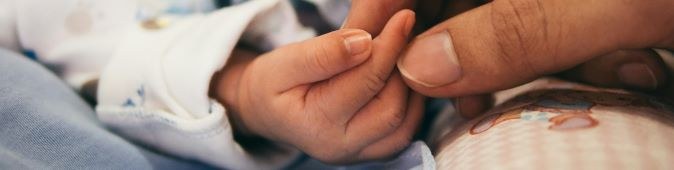
An adult hand holding a baby's hand
- and please, please, can we have more Urgent Care Service Centres.

You can read about the Culturally Diverse Citizens' Jury here.

Two people outdoors among trees at sunset, overlooking Western Sydney
8

Two citizen juries, similar but different

The first 2023 citizen jury in Western Sydney was made up of a representative group of culturally diverse western Sydney people. This group has ancestors in Australia who possibly go back into the late 1700's, but may have arrived here only decades ago.

I facilitated this group to deliberate on the question:

"should we, the people of Western Sydney continue to invest in the health system in the same way as we have in the past".

Over the course of the weekend, the focus was on the evidence and how it informed their recommendations. I witnessed how they grew not only their understanding of the complexity of our current health system, but also their intensifying focus on their role in creating a future "for the public good". The system of the future - no matter their postcode - would enable equitable access to whatever creates health and well-being. They showed us that the evidence was a powerful driver for their deliberations.

A few weeks later we convened the Western Sydney First Nations citizen jury. I enjoyed the way the First Nations facilitator brought the group together, the familiarity of being with mob, and it felt exciting. During the weekend I sensed a growing message for us, the organisers, that there was a step needed before considering the evidence. And this was the difference ...

This diverse group was collectively telling us that we need to deeply understand what "health" means to First Nations people.

This theme developed during the course of the weekend. I noticed less time was spent on discussing the actual presentations and more time developing the concept of WHOLISTIC health, which relates to the lens of the person within their family, within their neighbourhood, within their broader community and within their connected nations.... The protective nature of that connection. This goes deeper than right here right now. There is history to recognise, acknowledge and learn from. There are ancestors who are part of the present reality. The role of traditional gathering around food and community, of traditional lifestyle as protective of health and wellbeing.

None of this is new. In a May 2023 Summit, Aboriginal and Torres Strait Islander Women came together and, in a communique that resonates with our experiences here, affirmed:

  1. “The recognition that our cultures are foundational to societal and ecological health and wellbeing - Culture is essential to all existence, connecting us to kin and Country and keeping our identity strong.
  2. Placing care at the heart of policy design - Policies informed by First Nations conceptions of care will form healthier, safer and more just societies.”

We find it interesting that the big ticket items for both juries - beyond the cultural parameters of health and wellbeing for First Nations communities - had a lot in common. Well-informed citizens, whether First Nations or not, want to reinvest our health dollars into ensuring our kids, and families, are systematically nurtured during the tender early years to be able to thrive at school and find meaningful education pathways to become the professionals of the future.

However, the value of relationship-based, connected and integrated care is at the top of the list for how we go about designing health and social care

- without siloes, and with the long game in mind rather than the politicisation of these fundamental human services needed for health and wellbeing. So much more to share, and to feel the potential of growing these 2023 voices into a permanent ca in WS.

I feel changed by the 2023 citizen juries.

Relationships blossom into partnerships with diverse communities when we take responsibility for providing high quality information about complex human concerns, in a safe space with people from all sorts of backgrounds. This is the pathway to deep understanding of community needs and expectations.
Consumer Council

Co-designed "Consumer Council"

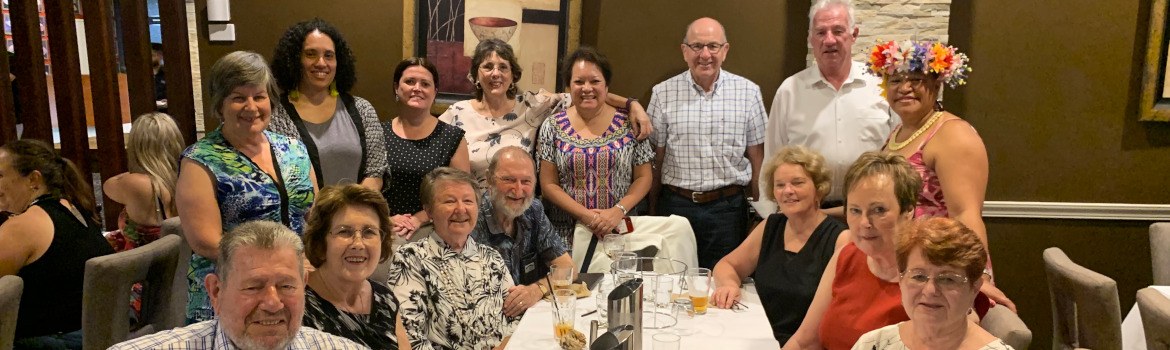
Members of the Consumer Council seated together at a dinner

Western Sydney Local Health District is the State-run hospital system connecting five hospitals across Western Sydney. In 2014 while I was working for the LHD, a strategy was initiated to bring together Western Sydney people interested in improving hospital-based services. Sitting down and listening to the stories of this group of people, and asking how they wanted to make a difference led to the first meeting of about twenty individual "Consumer Representatives in December 2014.

Along the way, governance systems were put in place to ensure risks were managed and everyone was able to contribute to the full extent of their interest.

The group has met monthly since then until the present, and has made a big difference to the quality of the hospital service. The direction and activity of the Council was led by the group who, during meetings, asked questions about how the system worked, and explored opportunities for improvement. Experts were invited to present their programs and aspirations, and the Council was able to support and suggest potential directions for greater impact. Consumer Representatives collectively co-designed many initiatives including the Auburn Hospital campaign in 2019. You can read more about the WSLHD Consumer Council today here.

Contact

Let's talk about what you need.

Call +61 497 854 018 or email hello@coraliewales.com.au.

Talk to Coralie ->